Most teams do not need another analytics platform.
They need better data flowing into the platforms they already use.
That is exactly where Luminal Analytics creates value.
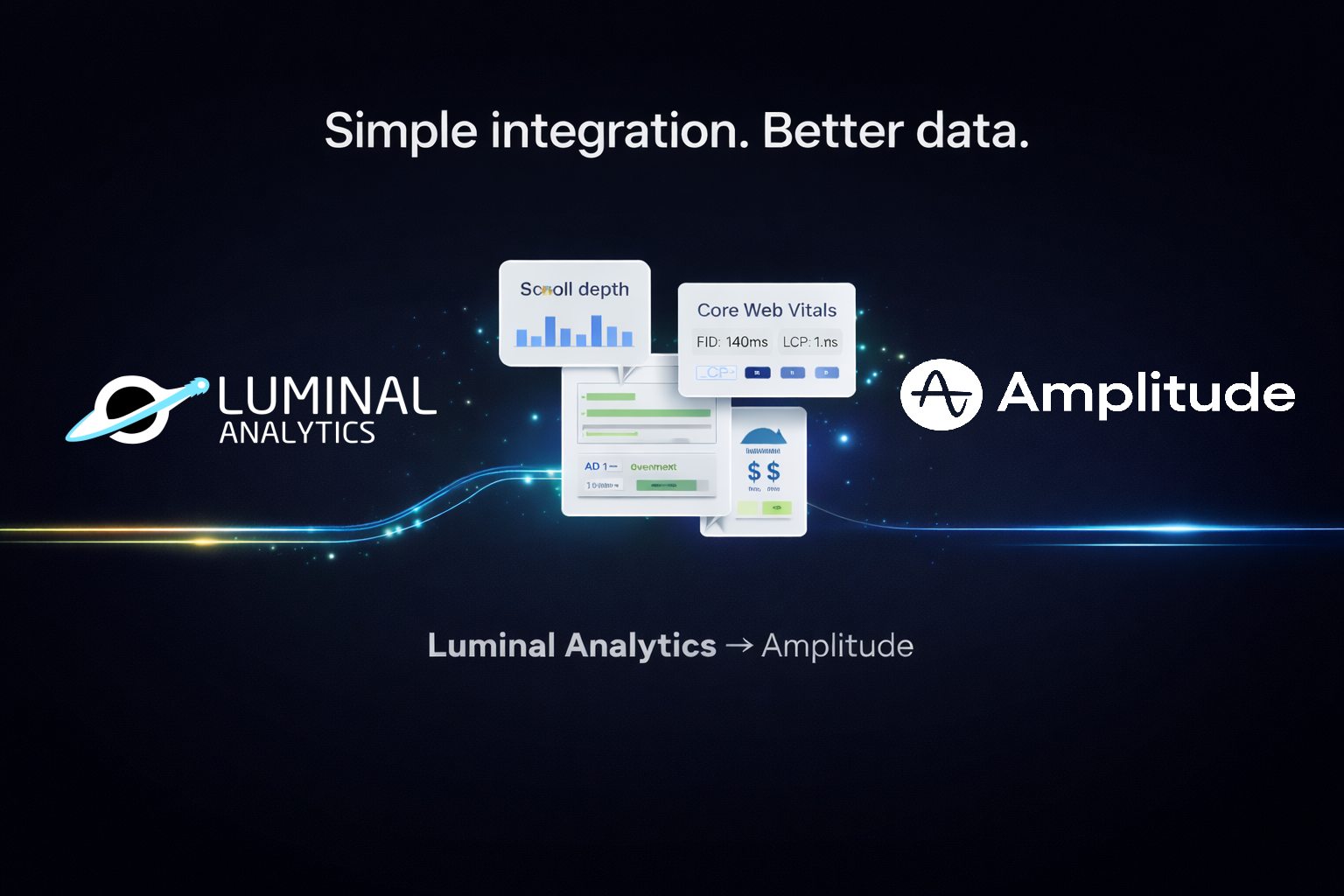
Luminal helps publishers and digital teams capture the signals that traditional analytics often miss — including true reading time, reader behavior, scroll depth, ad performance context, Core Web Vitals, and revenue-aware engagement data. Instead of forcing teams into a brand-new workflow, Luminal is built to send that richer data into the tools they already rely on.
That means your team can work inside platforms like Amplitude and Google Analytics while getting a much more complete view of what actually drives engagement and monetization. Luminal’s Amplitude integration is listed in Amplitude’s source catalog, and Luminal’s documentation also includes a Google Analytics integration page.
Why does that matter?
Because in most organizations, engagement data is incomplete, revenue data lives somewhere else, and performance signals are split across multiple tools. That makes it harder to answer basic business questions with confidence:
Which content actually holds attention? Which pages create value beyond the click? Where are ad experience issues hurting engagement or revenue? What should we optimize first?
Luminal closes those gaps by centralizing the data that matters most for content and monetization teams. On Luminal’s site, the company positions this as “all your data, one place,” with reader behavior, ad performance, and Core Web Vitals flowing into existing analytics setups rather than creating one more dashboard to learn.
What makes that especially powerful is the simplicity.
Luminal emphasizes an easy setup process, “no new dashboards,” and better data in the platforms teams already know. Its pricing and product pages also highlight support for custom integrations, API access on higher tiers, and professional implementation for enterprise customers.
So the value is not just in collecting more data.
It is in making your existing stack more useful:
- Amplitude for richer behavioral analysis, cohorts, and segmentation.
- Google Analytics for familiar reporting enriched with real engagement context.
- mParticle as part of a broader connected stack, if that integration is part of your live offering.
With Luminal, the message is simple:
- Easy to integrate.
- Built for real engagement.
- Connected to the tools your team already trusts.
That is how analytics becomes practical: not by replacing everything, but by making the data layer smarter.