One thing I keep thinking about in the AI space:
What happens when the engagement signals feeding our systems are not actually real indicators of engagement?
For years, many companies have optimized around metrics like:
- page views
- impressions
- time on page
- clicks
And to be fair, those metrics helped us build an entire generation of digital products and reporting systems.
But in today’s AI-driven world, I’m not sure those signals are enough anymore.
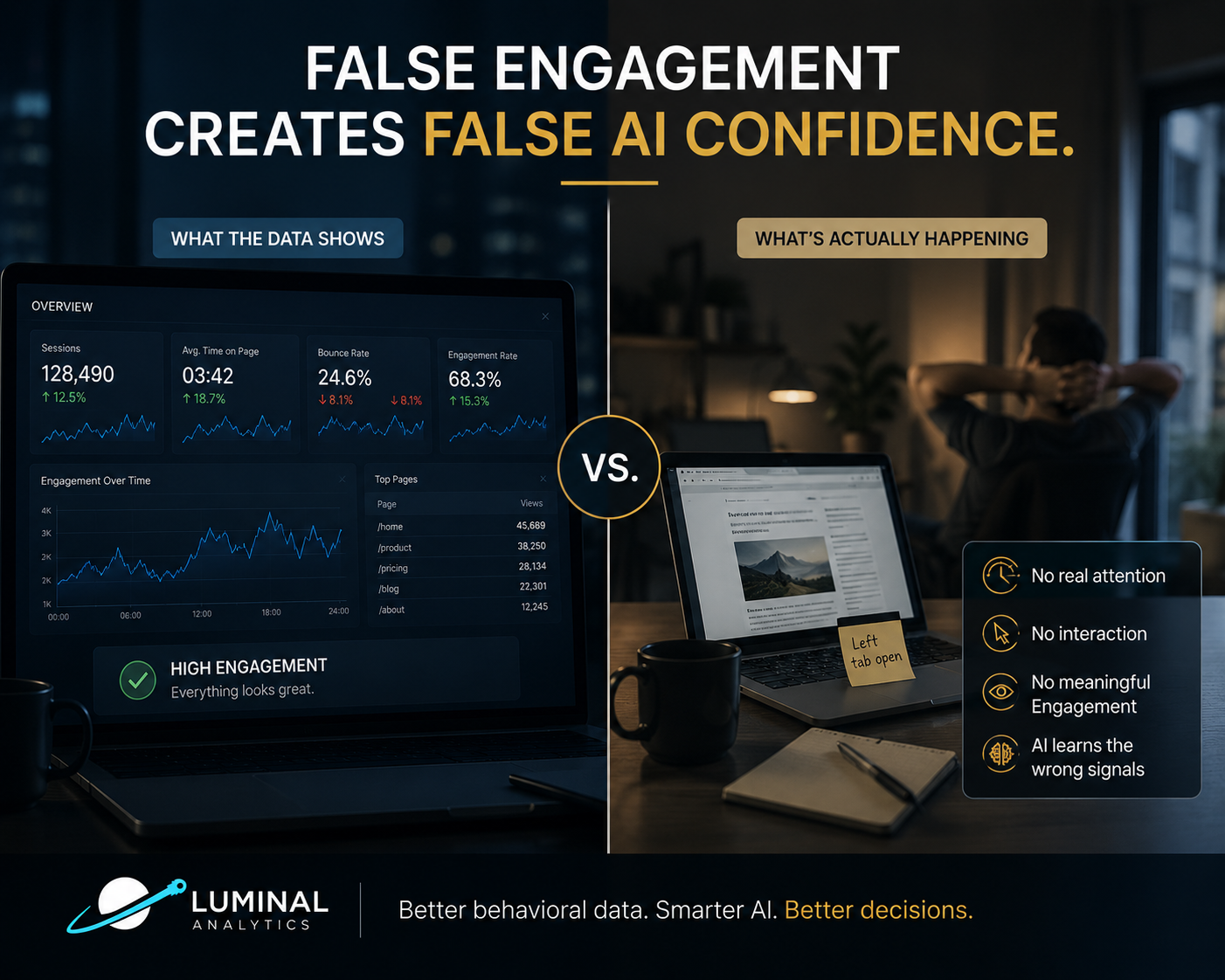
A user can open a page… leave the tab active… walk away from the computer… and many analytics platforms will still interpret that session as “engaged.”
The dashboards look healthy. The reports look positive. The campaign appears successful.
But was there actually attention? Was there real interaction? Was there meaningful engagement?
That’s where things become interesting with AI.
Because AI systems don’t question the quality of the behavioral signals they receive. They simply learn from them.
So if the underlying engagement data is incomplete or misleading, the resulting recommendations, optimizations, and business decisions can become misleading too.
Not intentionally. Not because the AI failed.
But because the behavioral understanding was never fully there to begin with.
I think this is one of the next major conversations companies will need to have around AI: How do we move beyond surface-level analytics and start understanding actual user behavior?
That question has been a huge part of why we built Luminal Analytics.
The goal was never to create “more dashboards.”
It was to help create a clearer picture of real engagement:
- how users actually consume content
- how attention changes during a session
- how experiences perform beyond clicks and impressions
- and how behavioral signals can become more meaningful for modern analytics and AI systems
AI will continue accelerating business decisions.
But the quality of those decisions will always depend on the quality of the signals underneath them.